08 April 2014

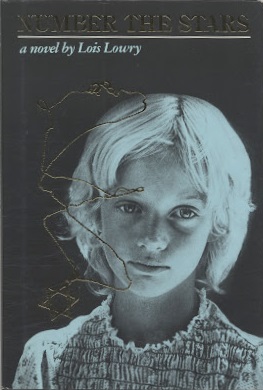
Number the Stars: 1990 Newbery Award Winner

The beginning of March 2014 I started a new undertaking: reading every single Newbery Medal Winner book. A number of them I have read in the past, but I am reading them with fresh eyes,and reviewing them for others. I am not reading them in order, as some will require some effort on my part to find them all. Want to keep track of which books I read?  Check them out at Confessions of a Wannabe Reader!

Number the Stars book cover.jpeg
Cover of the book - The image is used for identification purposes only under the fair use clause.

Annemarie Johansen: The Girl Who Was Brave

"That's all that brave means - not thinking about the dangers.  Just thinking about what you must do."

In Denmark in 1943, ten-year-old Annemarie Johansen and her Jewish best friend Ellen Rosen can remember a time when the Germans were not in charge of their country, even though Annemarie's little sister Kirsti cannot.   Annemarie also can remember her older sister, Lise, who died in an accident at the start of the war.  When the Nazis insist on rounding up all of the Danish Jews for relocation, Annemarie and her family protect Ellen by taking her into their home.  Soon after, Annemarie risks her life to save Ellen's and learns that being brave does not always mean one loses all fear.

Number the Stars is the first of two books by Lois Lowry to win the Newbery Award (The Giver was the second).  It is also a book that I have owned for years.  I read it first as a sixth grader and can remember then the power the story had for me.  I fell in love with it and I believe this story helped nurture my then budding love of history.  In college, I purchased the book to read again, and I used it when I tutored a young girl who was having trouble with reading, but enjoyed stories about heroines her own age.  She loved it too.

Number the Stars is a story that is based on true events, though they have been fictionalized.  There were things that happened in Denmark during World War II.  This book is the story of German occupation and the Danish Resistance that helped to bring about an end of the war and saved the lives of thousands of Danish Jews.  The author does an excellent job in her afterword explaining her inspiration for the events in the story.

The theme of this story is bravery.  Many people in the story were brave, including Annemarie.  She thinks that being brave means that one in not fearful, but learns that it means being able to do what needs to be done despite any fears that may be had.  Having read this again after a number of years, I can say that this book touched a spark in me that was dormant.  Lately, I have been fearful of a number of things, and this story reminds me that I can be brave too.

04 April 2014

Bud, Not Buddy: 2000 Newbery Award Winner

The beginning of March 2014 I started a new undertaking: reading every single Newbery Medal Winner book. A number of them I have read in the past, but I am reading them with fresh eyes,and reviewing them for others. I am not reading them in order, as some will require some effort on my part to find them all.  Want to keep track of which books I read?  Check them out at Confessions of a Wannabe Reader!

Bud, Not Buddy.jpg
Cover of the book - The image is used for identification purposes only under the fair use clause.

Bud Caldwell: The Boy on the Lam

"Rules and Things Number 39: The Older You Get the Worse Something Has to Be to Make You Cry"

At the height of the Great Depression, orphaned Bud Caldwell is ten years old and has lived in a number of different foster homes.   At least he did until he picked a fight with a foster brother and ran away.  His mother died when he was 6, and he doesn't know anything about his father, save that he was a musician, perhaps the famous musician Herman Calloway.  His mother had several flyers of Herman's bands. Carrying everything he owns in a beat up suitcase that he has to close with a piece of rope, Bud decides to head 120 miles on foot to Grand Rapids, Michigan, which is where Herman Calloway lives.  Along the way, he discovers that the rules he has established in his young life ring true, and that family is something that is made by more than just the bonds of blood.

I have read Bud, Not Buddy by Christopher Paul Curtis several times, and the short book is very touching.  Its a story of longing and belonging.  Bud longs for his lost mother.  Herman Calloway longs for his lost daughter.  It is also a story of growing up in a very trying time, as the Great Depression touched many lives in very hard ways. Children were forced to grow up faster and accept responsibilities for themselves even when they were not mature enough to do so.  Unlike other books I had read about the Great Depression, like Moon over Manifest and No Promises in the Wind by Irene Hunt , this one was unique in that it was told from the viewpoint of an African American child instead.

Just as the story of the Great Depression was not neatly resolved, the ending of this novel is not resolved in a neat and tidy ending, but one is left hoping that there are good things coming to Bud.

Johnny Tremain: 1944 Newbery Award Winner

The beginning of March 2014 I started a new undertaking: reading every single Newbery Medal Winner book.  A number of them I have read in the past, but I am reading them with fresh eyes,and reviewing them for others. I am not reading them in order, as some will require some effort on my part to find them all.  Want to keep track of which books I read?  Check them out at Confessions of a Wannabe Reader!

Johnny Tremain cover).jpg
Cover of the book - The image is used for identification purposes only under the fair use clause.


Jonathan Lyte Tremain: The Boy Who Stood as a Man

"A boy in time of peace and a man in time of war."

At the dawn of the American Revolution in the city of Boston in the Royal Colony of Massachusetts, there was a boy named Johnny Tremain.  He was apprenticed to an elderly silversmith and showed promise of being a master silversmith, but in an unfortunate accident he burns his hand to the point where it is not longer usable and he is ultimately thrown out of the silversmith's home.  Through a series of events, he becomes the trusted boy of a printer who helps the Sons of the Revolution, and through Johnny's eyes, the story of Boston's role in starting the American Revolution is played out.

This was the first time I read Johnny Tremain by Esther Forbes, although I did have intentions of reading it before.  Since I have a deep love for American History and reading both, this story was extremely interesting  and enjoyable to me once I got through the first few chapters.  The story and its vivid descriptions of both the people of Boston and the beginnings of the Revolution itself were very well-thought out.  Sam Adams, John Hancock, Paul Revere and the likes come to life in the pages of Johnny Tremain, and I especially liked the descriptions of James Otis.  The story reminded me of the loss that both the Yankees and the British felt in the start of the war.  Boys as young as fifteen were fighting in the start of the war, and some were dying.  Some people lost everything they had in Boston, and Esther Forbes did a very good job depicting those losses in her story.   Johnny himself must choose whether to stand as a man or remain a boy when he suffers his own losses.

If you enjoy American History and the time period surrounding the American Revolution in particular, you should read this book.

29 March 2014

A new geek for me - colorizing photographs

After reading about how people are colorizing old photographs for fun, I decided I wanted to try it.  But I don't have Photoshop on my computer, which was the program used in the tutorial I discovered on a Genealogy page on Facebook that I follow.  I have always used Gimp, so off to Google I went to find a similar tutorial for Gimp.  This tutorial is what I found that made the most sense to me.  I also have been using this site as another reference for things like skin tone and the like.

I spent about five hours working on a few photographs.  I really shouldn't have been up until the odd hours of the night, but the process had me hooked.  Here is what I did in those five hours.  I also started a third photo, but it wasn't turning out the way I wanted it to.  I had to crop the photo of my Vautier ancestor because some of the background was a little hard to color because it was out of focus.


The colored photos that are posted here are the work of Kelley Wood-Davis.  If you would like to use a copy of them, please ask for permission.

William J. Vautier, my mother's great grandfather.
The colored version of his photo - This photograph was colored by Kelley Wood-Davis March 2014.  PLEASE do NOT copy this without written permission!


Edward C. Waldspurger I, my mom's grandfather
The colored version - This photograph was colored by Kelley Wood-Davis March 2014.  PLEASE do NOT copy this without written permission!


I really enjoyed the process, and I may from time to time do this to other photos.  The fun part is trying to figure out what my ancestors' skin tones or hair color may have looked like.  For example, the photo I colored of Edward Waldspurger I used his World War II draft registration card.  It also helps that a number of family members today in the Waldspurger family have brown hair with auburn highlights, so I chose to make his brown hair slightly red..  It is in doing a project such as this, paying attention to complexion, eye color and skin color on a military form helps greatly.

28 March 2014

The Giver: 1994 Newbery Award Book

The beginning of March 2014 I started a new undertaking: reading every single Newbery Medal Winner book.  A number of them I have read in the past, but I am reading them with fresh eyes,and reviewing them for others. I am not reading them in order, as some will require some effort on my part to find them all.  Want to keep track of which books I read?  Check them out at Confessions of a Wannabe Reader!

The Giver Cover.gif
Cover of the book - The image is used for identification purposes only under the fair use clause.


Jonas: The One Who Sees Beyond

"He is to be alone, apart, while he is prepared by the current Receiver for the job which is most honored in our community."

In the Community where eleven-year-old Jonas lives, everything is the same.  No one is different, though they have different skills, it is rude to comment about something that makes them different.  The Community lacks the ability to feel, due to the choice long ago to go to "Sameness," but everyone is happy, as it is a seemingly Utopian society.  Jonas is discovered to have a gift that allows him to see beyond his Community, even though he does not understand, nor does anyone else in his community.  At the Ceremony of Twelve, when the children who are about to turn twelve receive their assignments for their adult careers, Jonas is selected to become the trainee of the most honored of his Community's Elders, The Receiver of Memory, the only one who knows what feelings, colors, and memories are.  Jonas, as the new Receiver, is given these memories from the old man, who calls himself The Giver, memories of warmth and love, of murder and pain, of life well before "Sameness".   In receiving these memories, Jonas learns that life in his Community isn't as happy as it seems, and he is torn between living the life he knows, or the one he longs for as a result of his memories.

This is the first book that I have read since undertaking this journey of reading all of the Newbery Award winning books that I had already read before.  I have read this book numerous times, and have read two of its sequels.  Every time I read it I notice something else in the story, another layer that makes me think.  The Giver, one of two Newbery Award winners by author Lois Lowry, is a story about what could happen if everything was the same.  I feel that it is a story of the human spirit triumphing over suppression, of love being able to conquer anything it chooses.  While the community is seemingly utopian, with everyone polite and devoid of any true feelings or differences that would make them self-conscious, it is ultimately a dystopian society with many problems, which is only seen by the two in the Community who hold on to the old memories.

26 March 2014

Sounder: 1970 Newbery Award Winner

The beginning of March 2014 I started a new undertaking: reading every single Newbery Medal Winner book.  A number of them I have read in the past, but I am reading them with fresh eyes,and reviewing them for others. I am not reading them in order, as some will require some effort on my part to find them all.  Want to keep track of which books I read?  Check them out at Confessions of a Wannabe Reader!

Sounder.jpg
Cover of the book - The image is used for identification purposes only under the fair use clause.


Sounder: The Loyal Dog

Sounder by William H. Armstrong is a story about a sharecropping man, his son, and his wonderful hound dog Sounder.  When the man is arrested and taken away, Sounder tries to save him, resulting in his wounding.  But the dog lives, as  the result of careful tending by the son and his mother.  The son, only known as the boy, tries to find his father and find a way for his family to survive without the man of the house. 

This book depressed me, and I struggled to finish reading it.  As far as value as historical fiction goes, this was a great story of life as a poor Negro sharecropper.  There is much pain and suffering in this short novel, and while some of the characters seem content with their lot in life, it seemed harsh and saddening.  The only character named in the story is the dog, Sounder, who is named for the way his bark sounds through the woods.  

After reading some of the other Newbery Medal books lately and feeling uplifted at the end of the reading, I felt like I was kind of let down by Sounder.  While the boy does achieve his goals and there is a slight hopefulness to the end of the book, there also a feeling of injustice and discontent. 

The Graveyard Book: 2009 Newbery Medal Winner

The beginning of March 2014 I started a new undertaking: reading every single Newbery Medal Winner book.  A number of them I have read in the past, but I am reading them with fresh eyes,and reviewing them for others. I am not reading them in order, as some will require some effort on my part to find them all.  Want to keep track of which books I read?  Check them out at Confessions of a Wannabe Reader!

TheGraveyardBook Hardcover.jpg
Cover of the book - The image is used for identification purposes only under the fair use clause.

Nobody Owens: The Living Boy 

‟I know my name,‟ he said.  ‟I'm Nobody Owens.  That's who I am."

A toddler wanders through a graveyard, oblivious to the fact that he is the only one of his family still alive, oblivious to the evil that pursues him.  For nearly fifteen years, Nobody, nicknamed Bod, lives in an old London cemetery.  He is the only living soul, raised by the otherworldly inhabitants as their own.  He is taught basic skills such as reading and writing and history, as well as ghostly skills of fading and haunting.  He discovers the ways of the living and prepares to deal with the evil that stalks him with the help of his ghost parents, the friends of the graveyard, and his mysterious guardian, Silas, who lives in the dark. 

This book was unlike any children's book that I have ever read.  The ghost stories alone would have given me nightmares as a child.  The first chapter has a grisly murder scene in it, making this book a book that is not for the faint of heart, but a great story for anyone who loves suspense and fantasy.  I did enjoy this story immensely.  The Graveyard Book by Neil Gaiman utterly fascinated me with its supernatural aspects and its descriptions of the characters as well as its original storyline.  The story is about wanting to belong; Bod wants to belong with his ghost family as well as with humans, while each of the ghosts wish they had ways of belonging when they were alive.