Showing posts with label story. Show all posts

12 September 2014

Dicey's Song : 1983 Newbery Award

The beginning of March 2014 I started a new undertaking: reading every single Newbery Medal Winner book. A number of them I have read in the past, but I am reading them with fresh eyes,and reviewing them for others. I am not reading them in order, as some will require some effort on my part to find them all. Want to keep track of which books I read? Check them out at Confessions of a Wannabe Reader!


CynthiaVoigt Dicey'sSong.jpg
Cover of the book - used for identification purposes only under the fair use clause
Dicey Tillerman : Keeping at Arm's Length

"You've been responsible a long time and done a good job.  Take a little rest now."

Dicey Tillerman is thirteen and lives with her three siblings James, Maybeth, and Sammy at her grandmother's house in the Chesapeake Bay area of Maryland, a place they had only recently moved to.  For so long, she has had to take care of siblings, having been abandoned by their mother in a parking lot in Massachusetts.  She feels lost having someone else do it, but Gram is determined to be the parent, as well as keep her own past hidden from her granddaughter.  Dicey's mother, living in Boston in a psychiatric hospital, is no better than catatonic, and the news worries Dicey and  James.  The family has to stay together, and that to Dicey means keeping others out.  But people like Maybeth's music teacher Mr. Lingerle, the slow shop keeper Millie, and fellow students Jeff and Mina, find their way into Dicey's heart and into the family fold. Dicey soon begins to learn that maybe taking care of others means letting others take care of her as well.

Dicey's Song by Cynthia Voigt is the second in a series of books written by the author.  Like Roll of Thunder, Hear My Cry, this book's resolution isn't really a resolution, but rather a interlude in the lives of the Tillerman children.  The book leaves you wondering what will happen next.

Dicey, the eldest of four, is consumed with worry.  She worries that her grandmother won't be able to care for them.  She worries that her little sister Maybeth won't be able to live a normal life, and that James and Sammy won't be able to fit in.  She worries that her mother will never be coming home or that she will take them off somewhere else to fend for themselves again.  She toughens herself up so that people can't get in, since so many people have left her, that she resists and fights when Mina, Jeff, Mr. Lingerle and even Millie find their way into the family.  

Dicey also has to learn to let go but still hold on.  For most of her siblings' lives, she has been their mother, and now that they live with their grandmother, Dicey must learn to stop being the mother in the other children's life.  Grandmother warns her that she must learn to continue to hold on though, something that confuses Dicey.  It isn't until she starts letting others into her hear besides her siblings that she learns what Grandmother means, and also learns that her grandmother is speaking from experience.  

This was the first book I could recall reading from this author, and I did enjoy it.  I am not sure thought if I want to continue on in the series.

23 May 2014

King of the Wind: 1949 Newbery Award

In March of 2014, I started a new undertaking: reading every single Newbery Medal Winner book. A number of them I have read in the past, but I am reading them with fresh eyes,and reviewing them for others. I am not reading them in order, as some will require some effort on my part to find them all. Want to keep track of which books I read? Check them out at Confessions of a Wannabe Reader!
King of the Wind.jpg
Cover of the book - used for identification purposes only under the fair use clause
Sham and Agba: Finding Their Way

"When Allah created the horse, he said to the wind, 'I will that a creature proceed from thee."

Agba is a mute orphan and slave horseboy to the chief groom of the Sultan of Morocco.  His favorite mare has died, so he raises her little colt, a horse the color of gold he names Sham.  Sham soon become the fastest horse in the Sultan's stables and is chosen as one of six Arabians to be given as a gift to the King of France.  But because the horses are small, the King of France sends them away.  Thus begins Sham and Agba's long journey to find greatness in Europe.  They journey to England, where the Earl of Goldolphin lives and become part of his estate.  But can Sham, with the help of the mute Agba, show his potential?

King of the Wind by Marguerite Henry, is based on the real story of the Goldolphin Arabian, who was used in the mid-18th century to help found the modern thoroughbred race horse.   The tale is a fictionalized account of his biography.

The tale reminded me of a cross between Charles Dickens' novel Oliver Twist and Anna Sewell's story Black Beauty.  The tale is the classic story of a bond between a boy and his animal, for better or for worse.  In this case, it is between the beautiful bay horse Sham and the boy who follows him everywhere, Agba.  Agba cannot speak, but he can communicate with Sham in a way in which no one else can understand.  He also learns to understand both English and French in the story, though it is unclear how.  They become impoverished and beaten down, and at one point are left to fend for themselves in the wild, only to have some good fortune smile down on them once more.

I had read a number of Marguerite Henry's books as a fourth grader when I went through a phase where I was horse crazy, but this was the first time reading this particular tale.  While is was a sweet story, it felt a bit contrived for me. The character of Agba seemed to be written into the story to give someone other than the horse the point of view for the story, and it bothered me a bit.  If you love horse and horse tales, this is a good read, otherwise it would bore you a bit.

21 May 2014

When You Reach Me: 2010 Newbery Award Winner

In March of 2014, I started a new undertaking: reading every single Newbery Medal Winner book.  A number of them I have read in the past, but I am reading them with fresh eyes,and reviewing them for others. I am not reading them in order, as some will require some effort on my part to find them all. Want to keep track of which books I read?  Check them out at Confessions of a Wannabe Reader!

Front cover featuring a shoe, bread bag, winter jacket, library book, Miranda's school, a key, Miranda's apartment, two-dollar bills and a mailbox; all important plot elements in the novel.
Cover of the book - used for identification purposes under the fair use clause

Miranda : Seeking Answers

"I am coming to save your friend's life, and mine."

It is the school year of 1978 - 1979 and Miranda is twelve years old.  Her best friend since infancy, Sal, has suddenly stopped talking to her and she feels lonely as a latchkey kid.  She relates to the character of Meg from her favorite book, A Wrinkle in Time because she suddenly has no one to talk to and she feels like she doesn't fit in. There is also a mysterious person who is leaving her notes in the New York City apartment she shares with her mother, notes that suggest things about Miranda that no one else knows, things that haven't happened yet.  Who is the mysterious person and what happened to the spare key her mother hid?  Why is there a guy running naked through the neighborhood?  Why does the homeless man on the corner laugh so much and act so weird?  And how is Miranda going to find new friends to replace Sal?

This was a book I had to read twice in a row.  The first time I read  When You Reach Me by Rebecca Stead, the pieces hadn't fallen into place until the very end of the book.  I had to reread the story to see how they had fit and to see the events I had missed before in a new light.  This story was very well written and extremely engaging.  

The biggest idea in this novel is the same idea that is in Madeleine L'Engle's novel, A Wrinkle in Time, and that idea it time travel.  Miranda herself wonders about it, as do other characters in the story, and each asks if it could be possible, and how it could work.  Could the homeless laughing man actually be a time traveler or is it just a figment of Miranda's imagination?  

Friendships play a big role in the story.  Sal just inexplicably decides to stop being friends with Miranda on day, which bothers her.  She has to make new friends, which is a difficult thing to do for some.  There is also fellow sixth-graders Annemarie and Julia, who decide one day to just stop being friends in the way that preteen girls do.  Eventually, Miranda comes to realize that in order to make new friends and strengthen old ones, she must grow and learn to emphasize with each of her fellow classmates.

This is a great read, but the concepts are a bit more intellectual and mature than some children can fathom at the suggested fourth grade reading level.

19 May 2014

Mrs. Frisby and the Rats of NIMH : 1972 Newbery Award Winner

In March of 2014, I started a new undertaking: reading every single Newbery Medal Winner book.  A number of them I have read in the past, but I am reading them with fresh eyes,and reviewing them for others. I am not reading them in order, as some will require some effort on my part to find them all.  Want to keep track of which books I read?  Check them out at Confessions of a Wannabe Reader!
Mrs frisby and the rats of nimh.jpg
Cover of the book - used for identification purposes only under the fair use clause.
Mrs. Jonathan Frisby: A Mouse on a Mission

With her son, Timothy, desperately ill with pneumonia and to frail to be moved, Mrs. Jonathan Frisby, a young widow of a mouse, is frantic.  Spring is creeping in and the farmer will be plowing his garden soon, the garden that was her family's winter home.  Mrs. Frisby must seek the help of the rats who live nearby.  They escaped from a laboratory at NIMH, but can they help save her son?

This was the first of the Newbery Award books that I had ever come in contact with, but it wasn't through a book.  I saw the Don Bluth movie, The Secret of NIMH as a very young child.  I remember it scared me. Let me say this.  If you have ever seen the movie, the book is different.  The book is titled Mrs. Frisby and the Rats of NIMH and was written by Robert C. O'Brien.  I like the book much better than the film adaptation, which leaves out a good number of plot development and changes the characters of Nicodemus, Jenner, and Jeremy.

That being said, the book is a good read.  The idea that rats have the intelligence of humans through laboratory testing is plausible, and the story, while whimsical and pastoral, does say much about the idea of animal testing.  

Family and loyalty are big themes of this story as well.  Mrs. Frisby is a widow with four small children, her husband having died the previous year.  She loves her children, who have inherited their intellect from their father, and will do anything to protect them.  The rats also love their families and will protect them, but also honor the loyalty that Jonathan and the mouse Mr. Ages have given to them throughout the years.  They also mourn the loss of part of their colony through schism.  

If you have a chance to read the book, I would highly recommend doing so.  

06 May 2014

From the Mixed-up Files of Mrs. Basil E. Frankweiler: 1968 Newbery Award Winner

The beginning of March 2014 I started a new undertaking: reading every single Newbery Medal Winner book.  A number of them I have read in the past, but I am reading them with fresh eyes,and reviewing them for others. I am not reading them in order, as some will require some effort on my part to find them all.  Want to keep track of which books I read?  Check them out at Confessions of a Wannabe Reader!
Basil E Frankweiler.jpg
Cover of the book: used for identification purposes only under the fair use clause

Claudia Kincaid: Looking to Feel Different

"The adventure is over.  Everything gets over, and nothing is ever enough.  Except the part you carry with you."

Claudia Kincaid is twelve-years-old and feeling unappreciated.  She's the eldest child and only girl in a family of brothers, and is sure her parents do things to either harass her or because they know absolutely nothing about the ways of the world.  As a result of this preteen frustration, she decides to run away from home.  She plans out her running away.  First, she will live in the Metropolitan Museum of Art in New York City.  Second, she will leave on a Wednesday so she can take her violin case full of clothing.  Third, she will take her second youngest brother, Jamie, because he has a radio and money.  The running away part of her plan goes smoothly, and the two siblings grow close as they transverse the museum.  However, Claudia feels the same as she did at home, as she wanted to feel different as a result of her adventure.  When she and Jamie discover a beautiful angelic statue that has recently been bought by the museum, Claudia becomes obsessed with finding out who the creator was.  Could it be Michelangelo?  That question leads the siblings to Connecticut and to the mixed up file system of the eccentric Mrs. Basil E. Frankweiler.

E. L. Konigsburg was one of my favorite authors growing up, and to this day I own a good number of her books.  From the Mixed-up Files of Mrs. Basil E. Frankweiler was the book that introduced me to this author.  I fell in love with the book because Claudia's character felt like a kindred spirit when I was a child.  Like Claudia, I wanted to feel different, and like Claudia, it took me awhile to realize that there is mystery in life around me.

That being said, this is a wonderful book from an adult viewpoint as well, as I have reread the book I own after having left it on my bookshelf for about eight years.  The idea that someone will hold on to secrets is one that rings true for adults, especially in this day and age where almost no one has secrets because of the information available at our fingertips.  I also thinks even adults wish they could run away from time to time and live in some place as cool as the Metropolitan Museum of Art.

01 May 2014

Maniac Magee: 1991 Newbery Medal Winner


The beginning of March 2014 I started a new undertaking: reading every single Newbery Medal Winner book.  A number of them I have read in the past, but I am reading them with fresh eyes,and reviewing them for others. I am not reading them in order, as some will require some effort on my part to find them all.  Want to keep track of which books I read?  Check them out at Confessions of a Wannabe Reader!

Maniac Magee cover.jpg
Cover of the book - used for identification purposes only under the fair use clause

Jeffery Lionel Magee: The Boy With No Home

"But that's okay, because the history of a kid is one part fact, two parts legend and three parts snowball."

Orphaned and homeless, Jeffery Magee runs to Two Mills, Pennsylvania in search of something.  The town, divided in half by race into African-American East End and Caucasian West End, doesn't know what to make of the twelve-year-old boy, who seems at home with both the Pickwells, a white family, and the Beales, a black family because he is unaware of the racial tensions that surround the town.  Thus, stories are started about him, all based in fact, but capitulated into myths as the stories grow and he is soon given the name Maniac. He is also scorned by some, and makes enemies of Mars Bars Thompson, a African American youth who is the "big cat" in the East End neighborhood, as well as John McNab, a white teen-aged bigot and bully.  But he also has friends in Amanda Beale, a black youngster with a love of reading, and Grayson, the elderly and illiterate white groundskeeper.  Maniac is born of local legend, but was really an ordinary homeless boy longing for a home and a family to call his own.

Maniac Magee was written in 1990 by Jerry Spinelli, an author whose works I happen to love reading.   While it is not specifically stated, this is a historical novel and takes place in the 1950s or early 1960s in Eastern Pennsylvania.  The book focuses on racism and one young boy's reaction to it in a way that is unique.  Maniac, having not realized that he is supposed to be different, embraces everyone in the town as a friend if they treat him right. He also teaches others to do the same, starting with Grayson and Amanda Beale.

I was reminded a bit of the character of Huckleberry Finn from Mark Twain's books as I read this story.  Like Huck, Maniac is searching for his place in the world and is an outsider in the world.  Like Huck, Maniac also doesn't understand the implications of racism as others think he should.  Also like Huck, Maniac moves from place to place, seemingly homeless.  The difference between the two characters, however, is that Maniac would rather have a home than live on his own.

This was a well written book, and I enjoyed it very much.  It was enjoyable reading about the stories surrounding Maniac that became legends and what is hinted to have happened to the town as a result of those legends. 

29 April 2014

The Door in the Wall: 1950 Newbery Award

The beginning of March 2014 I started a new undertaking: reading every single Newbery Medal Winner book.  A number of them I have read in the past, but I am reading them with fresh eyes,and reviewing them for others. I am not reading them in order, as some will require some effort on my part to find them all.  Want to keep track of which books I read?  Check them out at Confessions of a Wannabe Reader!

The Door in the Wall cover.jpg
Cover of the book - used for identification purposes only under the fair use clause
 Robin Crookshanks: Courageous Beyond His Years

"The courage you have shown, the craftsmanship proven by the harp, and the spirit in your singing all make so bright a light that I cannot see whether or no your legs are misshapen."

 Just before he is sent to be a page for Sir Peter de Lindsey, ten-year-old Robin, son of Sir John de Bureford, is stricken with a mysterious illness that robs him of the use of his legs.  His father is away with the King fighting the Scottish and his mother Lady Maud is awaiting the Queen, leaving Robin in the care of elderly servants who succumb to the plague attacking London.  Robin soon comes to live in a monastery, where he is cared for by the ever watchful monk, Brother Luke, who teaches Robin a number of useful skills, including the ability to walk with crutches.  When Robin is summoned to fulfill his duty as page to Sir Peter, he must rely on the skills that were taught to him an his own courage to face the challenges of being a crippled boy.  When danger strikes, he proves himself to be useful in a way that surprises even himself.

The Door in the Wall was written in 1949 by Marguerite de Angeli, who apparently was surprised to win the Newbery Award.  The book is a shot novel, but was a great read.  It is told from the point of view of Robin, though in third person, and talks of his struggles to overcome his new disability.  In a day and age where being crippled meant the loss of a useful life Robin shows that he is not only useful, but also courageous when needed.

The title of the story is also its theme.  As Brother Luke reminds Robin throughout the book, "Thou hast only to follow the wall far enough and there will be a door in it."  Every time Robin feels some sort of discouragement over his ailment, he is reminded that the skills he learns help him to overcome his perceived uselessness.  He learns to read, to craft, to swim and to play music, all skills which in the Middle Ages were hard to learn, and he keeps his cheerful heart throughout the story.  He learns that though he may never lose his disability, he can still be independent and self-confident in the abilities he has.  The message of the story is clear: anyone has a purpose if they look for it.

28 April 2014

Julie of the Wolves: 1973 Newbery Medal

The beginning of March 2014 I started a new undertaking: reading every single Newbery Medal Winner book.  A number of them I have read in the past, but I am reading them with fresh eyes,and reviewing them for others. I am not reading them in order, as some will require some effort on my part to find them all.  Want to keep track of which books I read?  Check them out at Confessions of a Wannabe Reader!
Julieofthewolves72.png
Cover of the book - used for identification purposes only under the fair use clause

Julie Edwards Miyak Kapugen : Caught Between Worlds

"Change your way when fear seizes.... for it usually means you re doing something wrong."

Miyax, also known by her American name Julie Edwards, is an Eskimo native who has known the ways of her father and her ancestors for most of her life.  When her father Kapugen disappears and she is married in the traditional way at age thirteen, she accepts her new life until it becomes a danger to her.  She runs away, intending to go to her American friend Amy in San Francisco.  However, she becomes lost on the Alaskan tundra with no food or way to guide her.  Her salvation comes in the form of a pack of wolves, led by a majestic male Miyax names Amaroq, or "father."  With the help of the wolves and the ways her father taught her, Miyax learns to survive, though she knows she must not remain in the wilderness.  She must choose between the old ways of her ancestors, and the new ways of the white foreigners.

Julie of the Wolves was written by Jean Craighead George and was one of the first survival stories I had ever encountered.  I remember having this read to my class when I was in fifth grade.  I had fallen in love with the book and bought a copy of it in college when I was building up a library of books.  Like Hatchet by Gary Paulsen, this book left a mark in my mind as one of the best stories of survival I read as a child.  I enjoyed rereading it again recently after having put it aside for almost a decade.

The wolves play a great role in this book, as they help Julie / Miyax survive once she learns to communicate with them.  Amaroq is majestic, and it is understood that he could kill Miyax easily, but sees her as a helpless pup.  Once he is sure she is strong, he shows her ways to survive on the tundra, just as her father once did before he disappeared.  While seized briefly by fear, Miyax becomes one with the wolves and part of their pack, looking out for the younger pups and learning their ways.

The story struck a chord with me because not only is it a survival story, but it is a story about a girl who is caught in a crisis of identity.  Is she Julie Edwards the American Eskimo, or Miyax of the old ways?  She relies on the stories of her father and ancestors to help her survive, but also longs for the ways of the gussaks, or whites, like her friend and pen pal, Amy.  She wants to be true to her ancestry, but also knows that the old ways are dying out as the ways of convenience take hold among her people.


27 April 2014

Onion John: 1960 Newbery Medal Book

The beginning of March 2014 I started a new undertaking: reading every single Newbery Medal Winner book.  A number of them I have read in the past, but I am reading them with fresh eyes,and reviewing them for others. I am not reading them in order, as some will require some effort on my part to find them all.  Want to keep track of which books I read?  Check them out at Confessions of a Wannabe Reader!

First off, I want to issue an apology for not blogging for a bit.  I have been reading, I just have also been busy.  Since it was a slow work week last week, I was busy working on genealogy, since Fold3 had free access to its Civil War databases for the latter half of May and Ancestry.com just released its first batch of Pennsylvania death certificates.  I also had Easter, the dear husband's birthday, and stuff to do with my wonderful batch of high school kids at church.


Onion John.jpg
Cover of the book - used for identification purposes only under the fair use clause
 Onion John: Throwback to an Innocent Age

"Because everything's changed for Onion John,on account of us getting to be friends the way we did."

Twelve year old Andy Rausch is at the edge of life where childhood innocence meets grown-up cynicism. He lives in Serenity, New Jersey and works for his dad in the family hardware store when he's not playing with his friends or attending school.  One day, while playing a Little League baseball game, he becomes friends with the town's eccentric hermit, Onion John.   Onion John lives in a stone hut with no running water, collects things from the town dump, and wears cast off clothing.  He also speaks a sort of jibberish language mixed with a smattering of English.  Andy soon becomes John's best friend, and discovers the old man lives in a world where clouds harbor good spirits, and the way to rid evil spirits is to smoke them out with different kinds of wood fires.  He enjoys the way Onion John lives and thinks.  But when Andy's dad starts to take interest in the old man and in improving John's life, Andy must make a decision that may change hs entire outlook on life, and end his friendship with his new best friend.


Onion John by Joseph Krumgold is a story of loss of innocence, and of the one man who still holds on to it.  John is a character who is a grown up, yet mysteriously he is still as innocent as a child.  Andy is a child who is about to lose the innocence of childhood as he enters into his teenage years, and while he wants to hold on to it, he struggles.

The book takes place in the mid fifties, and while a bit outdated, is still a good read.  However, I had a hard time reading this book.  The first part of the story was awesome and the character of John was well thought out and written.  I couldn't bear to finish reading it (though I forced myself to) because of the way the town takes an interest in John.  It was another tale of trying to improve a way of life that really didn't need improving.

What I did like was the ending.  It isn't a clear cut ending, such as life is not always clear, and it leaves something up to the imagination.  There is a "what if" aspect to the end of the book, which makes it worth having to force myself to finish this Newbery Medal winner.

18 April 2014

The Summer of the Swans: 1971 Newbery Award Winner

The beginning of March 2014 I started a new undertaking: reading every single Newbery Medal Winner book.  A number of them I have read in the past, but I am reading them with fresh eyes,and reviewing them for others. I am not reading them in order, as some will require some effort on my part to find them all.  Want to keep track of which books I read?  Check them out at Confessions of a Wannabe Reader!

File:Sswans s-1-.jpg
Cover of the book - The image is used for identification purposes only under the fair use clause


Sara Godfrey: Teenage Angst

"She could never really be sure of anything this summer.  One moment she was happy, and the next, for no reason, she was miserable."

Sara Godfrey is fourteen, and suddenly nothing seems right with her world.  It is summertime, and Sara lives in a West Virginia town with beautiful older sister Wanda and her mentally-handicapped brother Charlie, who are watched over by her father's younger sister Willie while he works in another state.  Sara finds fault with everyone but her little brother, because he can't help himself, and wishes she could fly away like the swans that live on the nearby lake.  She is also extremely overprotective of Charlie, and stops at nothing to "avenge" any wrongs done to him, though most are minor, and the resulting punishments she endures puts her deeper into a "world is out to get her" funk.  When Charlie disappears, Sara must come out of her teen-aged moodiness to figure out what really is important to her, and why her family does what they do.

This was a quick read for me, as I read it in only twenty minutes.  It was a good read, and an accurate description of teenage angst.  The Summer of the Swans, by Betsy Byars, is the story of one girl discovering that the world is not unfair to her, no matter how much she thinks it is.  Sara, being a middle child, feels like everyone is threatening to her, and she must act out to protect herself and her brother.  When she discovers that people can and do change, or at least her perceptions of them can change, she matures.  The story takes place in only two days, but was a good story nevertheless.

One thing I find interesting is the amount of Newbery Award winning books that take place in West Virginia.  I seem to have read them almost one after the other.  Summer of the Swans is just one example.  Missing May, Shiloh, and Belle Prater's Boy (while not a winner it is a Newbery Honor Book) all take place in West Virginia and Walk Two Moons has part of its setting in the Appalachians as well.

17 April 2014

The Westing Game: 1979 Newbery Award Winner

The beginning of March 2014 I started a new undertaking: reading every single Newbery Medal Winner book. A number of them I have read in the past, but I am reading them with fresh eyes,and reviewing them for others. I am not reading them in order, as some will require some effort on my part to find them all.  Want to keep track of which books I read?  Check them out at Confessions of a Wannabe Reader!

Westing cover.jpg
Cover of book - used for identification purposes only under the fair use clause
Samuel Westing: Eccentric Man

"I, Samuel W. Westing, hereby swear that I did nor die of natural causes.  My life was taken from me - by one of you!"

The millionaire Samuel Westing mysteriously dies, and sixteen people in the neighboring apartment building are chosen to come to the reading of the will.  Because the late eccentric loved his games, the sixteen near strangers, are to compete for a chance to win his fortune.  The only problem is that one of them probably killed the old man.  Is it the Chinese restaurateur James Shin Hoo, his wife Mrs. Hoo, or his son Doug?  Is it Jacob Wexler, podiatrist and bookie?  How about his wife, Grace, or daughters Angela and Turtle?  Maybe it is Angela's fiance, Doctor Denton Deere.  Is it one of the brothers, Theo and Chris Theodorakis?  Is it the dressmaker Flora Baumbach, or the judge J.J. Ford? Maybe it's the doorman, Sandy McSouthers, or the old washerwoman Crow.  Perhaps it is the secretary Sydelle Pulaski or Otis Amber the weird deliveryman.  One of them will win the game, and one of them will be exposed for his or her crime.  But who is it?  Thus begins the Westing Game.

The Westing Game is a novel by Ellen Raskin and one of the best mysteries I have ever read.  I have always enjoyed wordplay and there is a great deal of it in this story.  The story is also reminiscent of the Encyclopedia Brown series by Donald Sobel in that there is a mystery which  can only be found because of a way things could be worded.  This book also brought to mind the movie Rat Race in which there were several people scrambling to find clues to a fortune.

The author does an excellent job of weaving together stories, and shows how these sixteen people were chosen as contestants.  The way that she brings all of them together is both comical and sweet at various times.  There are stories that contrast each other as well as stories that parallel.  Almost all of the characters grow and change during the novel as well.  And unlike some stories  in which there is a large ensemble of main characters, there is no getting lost when the author switches from one character to another.

15 April 2014

Shiloh: 1992 Newbery Award Winner

The beginning of March 2014 I started a new undertaking: reading every single Newbery Medal Winner book. A number of them I have read in the past, but I am reading them with fresh eyes,and reviewing them for others. I am not reading them in order, as some will require some effort on my part to find them all.  Want to keep track of which books I read?  Check them out at Confessions of a Wannabe Reader!

FirsteditioncoverofShiloh.gif
Cover of book - used for identification purposes only under the fair use clause
Marty Preston: Determined to Do Right

"I’m thinking how nothing is as simple as you guess-not right or wrong, not Judd Travers, not even me or this dog I got here."

Marty Preston lives in the hills of Friendly, West Virginia.  At eleven, he wishes for a dog of his own, but there is little money for the family, and no money to support any pets.  While roaming the woods one day, he comes across a scared and abused beagle.  When he discovers that the dog belongs to his neighbor, Judd Travers, who is known to be an angry man, he decides to hide the dog, whom he names Shiloh, to protect him from Judd.   In doing so, he has to keep Shiloh a secret from his family, and when the secret starts to become to hard for him to handle, he finds that he's placing not only Shiloh's life in danger of exposure to Judd's anger, but his family as well.

Shiloh was written by Phyllis Reynolds Naylor.  I read it as a preteen and enjoyed it.  Rereading it again was like rediscovering a sliver of my childhood.  The story is bittersweet at times, and does have a happy ending, as well as a few sequels.  While I haven't read the sequels, I did enjoy this book as a child, and I enjoyed it again having re-read it as an adult.

The story is a coming-of-age novel, as Marty must battle with morals in his plight to do what is right.  Should he save Shiloh, or give Judd back what is legally his?  He wrestles with things that aren't black and white, and grows in maturity as a result.  Marty also learns that sometimes growing up is hard, for there isn't always an answer that will make everyone happy.  He also learns that not every adult will stay true to their word, and that the innocence of the world masks some of the horrors of it.

14 April 2014

Roll of Thunder, Hear My Cry: 1977 Newbery Award Winner

The beginning of March 2014 I started a new undertaking: reading every single Newbery Medal Winner book. A number of them I have read in the past, but I am reading them with fresh eyes,and reviewing them for others. I am not reading them in order, as some will require some effort on my part to find them all.  Want to keep track of which books I read?  Check them out at Confessions of a Wannabe Reader!
Rothmc cover.jpg
Cover of the book - Used for illustration purposes only under the fair use clause


Cassie Logan: Wishing For Change

"Oh, P-Papa, d-does it have to be?' ......'All I can say, Cassie girl... is that it shouldn't be."

Nine-year-old Cassie Logan lives in on her family's farm in Mississippi with her parents, her grandmother and her three brothers.  They are unique in their community because they are the only black family in the town to own land.  That doesn't mean they aren't being affected by the Depression going on around them though, as the land is mortgaged and the family does not have enough to make ends meet.  There is also the fact that many of the whites in the area can't stand the "uppity" ways of the Logan family.  When a series of events threaten to destroy Cassie's preconceived notion of how her life is, Cassie must struggle to accept her place in society and the fact that her family isn't as special as she believes.

I had recently read Roll of Thunder, Hear My Cry by Mildred D. Taylor, as it was read by the sixth grade class at the school I work at as one of their English novels, and I had been subbing for one of the English teachers at that time.  It is a great work about the lives of sharecropping African Americans versus the whites that lived in the areas, and an accurate account of what happened to those who went against the norms of society.

Struggle is a theme of this book.  Cassie struggles to find her place in society, as she deals with the racism of white children and adults alike.  Her parents struggle to make the farm successful.  Her elder brother, Stacy, struggles to be friends with two boys in the community, one black named T.J. Avery and one white named Jeremy Simms.

This was a difficult book to read, but was also a good book to read.  Like Sounder, this book is written from the perspective of an African American child.  The racism and tragic events in this story were told from Cassie's perspective, which seemed to soften their harshness.  I did enjoy this book more than I had Sounder, though this was not one of my favorites from this project.  It is a book that will open a child's eyes to the horrors of racism.

11 April 2014

A Year Down Yonder: 2001 Newbery Award Winner

The beginning of March 2014 I started a new undertaking: reading every single Newbery Medal Winner book. A number of them I have read in the past, but I am reading them with fresh eyes,and reviewing them for others. I am not reading them in order, as some will require some effort on my part to find them all.  Want to keep track of which books I read?  Check them out at Confessions of a Wannabe Reader!


A Year Down Yonder.jpg
Cover of the book - Used for illustration purposes only under the fair use clause

Sometimes I binge read and then remember to write up reviews on several books at once, or I write up reviews on sheets of paper and then have to find time to type them into the computer, so forgive the multiple posts today.


Mary Alice Dowdel: The City Gal

Mary Alice Dowdel used to spend just her summers at her grandmother's house in southern Illinois, but the year is 1937 and the Great Depression has hit her family hard.  Her parents are boarding in a single room, her brother is working out West, and the fifteen-year-old is sent to live with her grandmother for the entire year.  She is not happy with the prospect, as her grandmother lives in a very rural area that is very hick to the Chicago girl.  Her grandmother is tough as nails and very no nonsense, and Mary Alice dreads the prospect of living with her.  But that changes as Mary Alice gets to know her grandmother and warms up to some of the townsfolk.   She learns that maybe the year spent "down yonder" wasn't so bad.

I had read this story before and thoroughly enjoyed it when I read it.  A Year Down Yonder is the middle book of a trilogy by Richard Peck, who also wrote the book Strays Like Us (another book I really enjoyed reading).  It is the heartwarming tale of a teen who learns that her seemingly backwards grandmother isn't as backwards as she seems.  It is also a tale about coming home.  This book, which seems to be written for teenagers instead of children, is an awesome story of remembering a stage in childhood for a young woman.  Some of it reminded me of elements of the book Belle Prater's Boy, particularly the revealing of some of the townsfolk's secrets and the way that some of the hoity-toity elite of the town try to stay away from the country bumpkins.  It is a very good read.

Flora and Ulysses: 2014 Newbery Award

The beginning of March 2014 I started a new undertaking: reading every single Newbery Medal Winner book. A number of them I have read in the past, but I am reading them with fresh eyes,and reviewing them for others. I am not reading them in order, as some will require some effort on my part to find them all.  Want to keep track of which books I read?  Check them out at Confessions of a Wannabe Reader!

Cover of the book - Used for illustration purposes only under the fair use clause
Flora Belle Buckman: The Cynic

"I promise to always turn back toward you."

Comic-book loving Flora Buckman, the only way to cope with her distant mother and her depressed father is to be cynical.  When a squirrel is sucked up into a neighbor's runaway vacuum, Flora comes to his rescue and brings the squirrel back to life. She is then amazed to find that the incident has left the squirrel with super hero powers of flight and super-strength, just like in her beloved comic books.  She names him Ulysses and takes him with her.  With the help of Ulysses, the weird boy next door named William Spiver, and a series of zany events, Flora learns to hope and love again and teaches those around her to do the same.

Flora and Ulysses: The Illuminated Adventures was an interesting read for me.  The story is fantastic in nature, being a story about a super-hero squirrel.  The zaniness of the story kept me enthralled until the end of the book.  Having already read Kate DiCamillo's first Newbery Award book The Tale of Despereaux and her book Because of Winn-Dixie, I was used to her writing style, which flows freely and reads easily.

The theme of this book is love, family love in particular.  Flora has tried to stop loving those around her because it appears those around her have stopped loving her with all of their heart.  Yet when she saves Ulysses, a little of the cynical wall that she has built up around her heart starts to melt.  Throughout the adventures the tow have, they touch the lives around them, from Flora's parents, to William Spiver and his great-aunt, to the neighbor of her father's.  The story twists and turns and even has an arch-nemesis. Overall, it is a fun read with an ending that seems to mean good things to come for our superhero and his sidekick.

09 April 2014

Island of the Blue Dolphins: 1961 Newbery Award Winner

 The beginning of March 2014 I started a new undertaking: reading every single Newbery Medal Winner book. A number of them I have read in the past, but I am reading them with fresh eyes,and reviewing them for others. I am not reading them in order, as some will require some effort on my part to find them all.   Want to keep track of which books I read?  Check them out at Confessions of a Wannabe Reader!

Blue dolphins.jpg
Cover of the book - The image is used for identification purposes only under the fair use clause.
 
Karana: The Lonely Girl

When what is left of her decimated Nicoleño tribe sails away from their island home on a Spanish ship, Karana is left behind with her little brother, Ramo.  When Ramo is killed tragically a short time later by a pack of wild dogs, Karana is left to fend for herself to wait and watch for the ship to return.  In the years that follow, she survives as she battles loneliness, the elements and the dangers of the Island of the Blue Dolphins.

Island of the Blue Dolphins by Scott O'Dell is based on the story of the Lone Woman of San Nicolas Island (see the Wikipedia account of her tale), though as with all historical fiction, I am sure poetic license was taken.  I had never read this book before, but I was reluctant too because of personal reasons.  That being said, I did enjoy the book.  The story of Karana's struggle, while a bit difficult to read, is one anyone can relate to if they have dealt with loneliness.  It is a story of survival, and echoes the stories told in the books  The Cay by Theodore Taylor and Hatchet by Gary Paulson, in which characters must deal with learning how to survive by themselves.  However, this is unique in that the character doing the surviving is a female.

The setting of the book was familiar to me, as it takes place on the island of San Nicolas, one of California's Channel Islands.  Having spent a good deal of my life in California, the history of the state has been ingrained in me.

Overall, this was a good read for me, but I am not interested in reading the sequel, called Zia.  My reasoning for this is that the Lone Woman of San Nicolas died shortly after being rescued from San Nicolas Island, which doesn't leave much of a story for a sequel that I would be interested in reading.  I am sure Zia is an excellent book, just not one that would interest me at the present time.

Keeping tabs on the books I read?  Check them out at Confessions of a Wannabe Reader!

08 April 2014

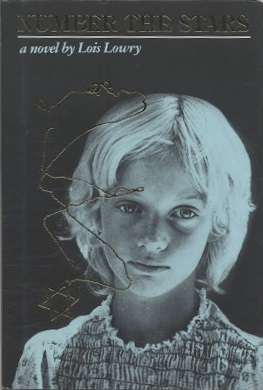
Number the Stars: 1990 Newbery Award Winner

The beginning of March 2014 I started a new undertaking: reading every single Newbery Medal Winner book. A number of them I have read in the past, but I am reading them with fresh eyes,and reviewing them for others. I am not reading them in order, as some will require some effort on my part to find them all. Want to keep track of which books I read?  Check them out at Confessions of a Wannabe Reader!

Number the Stars book cover.jpeg
Cover of the book - The image is used for identification purposes only under the fair use clause.

Annemarie Johansen: The Girl Who Was Brave

"That's all that brave means - not thinking about the dangers.  Just thinking about what you must do."

In Denmark in 1943, ten-year-old Annemarie Johansen and her Jewish best friend Ellen Rosen can remember a time when the Germans were not in charge of their country, even though Annemarie's little sister Kirsti cannot.   Annemarie also can remember her older sister, Lise, who died in an accident at the start of the war.  When the Nazis insist on rounding up all of the Danish Jews for relocation, Annemarie and her family protect Ellen by taking her into their home.  Soon after, Annemarie risks her life to save Ellen's and learns that being brave does not always mean one loses all fear.

Number the Stars is the first of two books by Lois Lowry to win the Newbery Award (The Giver was the second).  It is also a book that I have owned for years.  I read it first as a sixth grader and can remember then the power the story had for me.  I fell in love with it and I believe this story helped nurture my then budding love of history.  In college, I purchased the book to read again, and I used it when I tutored a young girl who was having trouble with reading, but enjoyed stories about heroines her own age.  She loved it too.

Number the Stars is a story that is based on true events, though they have been fictionalized.  There were things that happened in Denmark during World War II.  This book is the story of German occupation and the Danish Resistance that helped to bring about an end of the war and saved the lives of thousands of Danish Jews.  The author does an excellent job in her afterword explaining her inspiration for the events in the story.

The theme of this story is bravery.  Many people in the story were brave, including Annemarie.  She thinks that being brave means that one in not fearful, but learns that it means being able to do what needs to be done despite any fears that may be had.  Having read this again after a number of years, I can say that this book touched a spark in me that was dormant.  Lately, I have been fearful of a number of things, and this story reminds me that I can be brave too.

04 April 2014

Johnny Tremain: 1944 Newbery Award Winner

The beginning of March 2014 I started a new undertaking: reading every single Newbery Medal Winner book.  A number of them I have read in the past, but I am reading them with fresh eyes,and reviewing them for others. I am not reading them in order, as some will require some effort on my part to find them all.  Want to keep track of which books I read?  Check them out at Confessions of a Wannabe Reader!

Johnny Tremain cover).jpg
Cover of the book - The image is used for identification purposes only under the fair use clause.


Jonathan Lyte Tremain: The Boy Who Stood as a Man

"A boy in time of peace and a man in time of war."

At the dawn of the American Revolution in the city of Boston in the Royal Colony of Massachusetts, there was a boy named Johnny Tremain.  He was apprenticed to an elderly silversmith and showed promise of being a master silversmith, but in an unfortunate accident he burns his hand to the point where it is not longer usable and he is ultimately thrown out of the silversmith's home.  Through a series of events, he becomes the trusted boy of a printer who helps the Sons of the Revolution, and through Johnny's eyes, the story of Boston's role in starting the American Revolution is played out.

This was the first time I read Johnny Tremain by Esther Forbes, although I did have intentions of reading it before.  Since I have a deep love for American History and reading both, this story was extremely interesting  and enjoyable to me once I got through the first few chapters.  The story and its vivid descriptions of both the people of Boston and the beginnings of the Revolution itself were very well-thought out.  Sam Adams, John Hancock, Paul Revere and the likes come to life in the pages of Johnny Tremain, and I especially liked the descriptions of James Otis.  The story reminded me of the loss that both the Yankees and the British felt in the start of the war.  Boys as young as fifteen were fighting in the start of the war, and some were dying.  Some people lost everything they had in Boston, and Esther Forbes did a very good job depicting those losses in her story.   Johnny himself must choose whether to stand as a man or remain a boy when he suffers his own losses.

If you enjoy American History and the time period surrounding the American Revolution in particular, you should read this book.

28 March 2014

The Giver: 1994 Newbery Award Book

The beginning of March 2014 I started a new undertaking: reading every single Newbery Medal Winner book.  A number of them I have read in the past, but I am reading them with fresh eyes,and reviewing them for others. I am not reading them in order, as some will require some effort on my part to find them all.  Want to keep track of which books I read?  Check them out at Confessions of a Wannabe Reader!

The Giver Cover.gif
Cover of the book - The image is used for identification purposes only under the fair use clause.


Jonas: The One Who Sees Beyond

"He is to be alone, apart, while he is prepared by the current Receiver for the job which is most honored in our community."

In the Community where eleven-year-old Jonas lives, everything is the same.  No one is different, though they have different skills, it is rude to comment about something that makes them different.  The Community lacks the ability to feel, due to the choice long ago to go to "Sameness," but everyone is happy, as it is a seemingly Utopian society.  Jonas is discovered to have a gift that allows him to see beyond his Community, even though he does not understand, nor does anyone else in his community.  At the Ceremony of Twelve, when the children who are about to turn twelve receive their assignments for their adult careers, Jonas is selected to become the trainee of the most honored of his Community's Elders, The Receiver of Memory, the only one who knows what feelings, colors, and memories are.  Jonas, as the new Receiver, is given these memories from the old man, who calls himself The Giver, memories of warmth and love, of murder and pain, of life well before "Sameness".   In receiving these memories, Jonas learns that life in his Community isn't as happy as it seems, and he is torn between living the life he knows, or the one he longs for as a result of his memories.

This is the first book that I have read since undertaking this journey of reading all of the Newbery Award winning books that I had already read before.  I have read this book numerous times, and have read two of its sequels.  Every time I read it I notice something else in the story, another layer that makes me think.  The Giver, one of two Newbery Award winners by author Lois Lowry, is a story about what could happen if everything was the same.  I feel that it is a story of the human spirit triumphing over suppression, of love being able to conquer anything it chooses.  While the community is seemingly utopian, with everyone polite and devoid of any true feelings or differences that would make them self-conscious, it is ultimately a dystopian society with many problems, which is only seen by the two in the Community who hold on to the old memories.

26 March 2014

The Graveyard Book: 2009 Newbery Medal Winner

The beginning of March 2014 I started a new undertaking: reading every single Newbery Medal Winner book.  A number of them I have read in the past, but I am reading them with fresh eyes,and reviewing them for others. I am not reading them in order, as some will require some effort on my part to find them all.  Want to keep track of which books I read?  Check them out at Confessions of a Wannabe Reader!

TheGraveyardBook Hardcover.jpg
Cover of the book - The image is used for identification purposes only under the fair use clause.

Nobody Owens: The Living Boy 

‟I know my name,‟ he said.  ‟I'm Nobody Owens.  That's who I am."

A toddler wanders through a graveyard, oblivious to the fact that he is the only one of his family still alive, oblivious to the evil that pursues him.  For nearly fifteen years, Nobody, nicknamed Bod, lives in an old London cemetery.  He is the only living soul, raised by the otherworldly inhabitants as their own.  He is taught basic skills such as reading and writing and history, as well as ghostly skills of fading and haunting.  He discovers the ways of the living and prepares to deal with the evil that stalks him with the help of his ghost parents, the friends of the graveyard, and his mysterious guardian, Silas, who lives in the dark. 

This book was unlike any children's book that I have ever read.  The ghost stories alone would have given me nightmares as a child.  The first chapter has a grisly murder scene in it, making this book a book that is not for the faint of heart, but a great story for anyone who loves suspense and fantasy.  I did enjoy this story immensely.  The Graveyard Book by Neil Gaiman utterly fascinated me with its supernatural aspects and its descriptions of the characters as well as its original storyline.  The story is about wanting to belong; Bod wants to belong with his ghost family as well as with humans, while each of the ghosts wish they had ways of belonging when they were alive.